Common Questions (and Answers) for a Professional Organizer

When organizing people’s homes we often answer the same questions again and again. While our answers occasionally change based on the situation, we’ve also come up with general strategies and concepts that seem to ring true for most.

1) Should I keep all of the sizes I fluctuate between? This is a common problem. We find that many individuals with overflowing closets are often holding on to wardrobes in several sizes because of frequent weight changes. What we always tell people is that it’s easier to fluctuate between sizes when you have the next size up available to you. If your jeans were getting a bit tight and you had no larger size available, you might be more conscious of eating healthy and working out to make the current jeans fit again.

2) What do I do with the stuff I’m storing for family/friends? The first question to ask is how long have you been storing the items. Next ask yourself if there was a time limit placed on providing the storage and when the last time the owner mentioned the items. If you’ve had clothing from a relative for several years, chances are they don’t need it anymore and would be fine giving it away. If they truly want the items give them a deadline by which to move them and stand by it. Just remember, this is your home, not a storage unit.

3) How do I maintain the organization? This is the most difficult part of organizing for most people. They love the idea of getting organized, but struggle to maintain it after we’ve left. To assist in keeping your home tidy and organized, commit to a daily routine of putting things back where they belong. Each night, before you go to bed walk around the home and conduct a mini-reset. This will help keep things from getting out of control. Labels are also a great idea to ensure things go back to their rightful homes.

4) What papers do I keep and what can be tossed? In general, if you can find a copy of the document somewhere online, shred, recycle or trash the hard copy. For documents that are currently being used, maintain a inbox/outbox system that is reviewed each week for expired/unnecessary items. To determine what documents need to be stored long-term or for tax purposes, review Suze Orman’s Financial Clutter, What to Keep List.

5)  Am I a Hoarder? It is common for individuals using a professional organizer to feel like perhaps they are a Hoarder. The reality is that the amount of collecting or acquisition that it takes to become a Hoarder is significant and most people do not fit the clinical definition. That being said, there are many people with hoarding tendencies. If any of the following statements are true, you may benefit more from a mental health professional, than an organizer.

  • You acquire belongings to fulfill an emotional need
  • You hold onto excessive amounts of items with little or no value (i.e. newspapers, old magazines, trash, etc.)
  • Your belongings have taken over the space you require to live comfortably in your home
  • You are extremely reluctant to part with any belongings, no matter their frequency of use, value, or usefulness
  • The collecting of items has otherwise impaired your life or health

What are some of the questions you’ve always wanted to ask a professional organizer?

TWOW

Guest Post: 7 Benefits of Green Cleaning

Learn why you should switch to eco-friendly cleaning products.

As lives become busier, over-scheduled and more stressful, it’s easy to gravitate towards the latest products that promise to make annoying chores even easier. Need a bathroom cleaner? On your next trip to the store, you grab one of the many bright and colorful bottles promising to be a quick fix. But did you ever think about what’s in that container?

Whether you’re a housekeeper who cleans with these products all day or someone who cleans your own home regularly, you should take the time to consider it.

Most are made up of harsh cocktails of chemicals, which can be bad for your health — and your kids’ health. As people rethink what they’re bringing into their homes, they’re looking for greener solutions.

Two experts Leslie Reichert, author of “Joy of Green Cleaning,” and Sara Snow, author of “Sara Snow’s Fresh Living,” share the reasons why people should make the switch to green cleaning products.

What to try green cleaning for yourself? Read up on Green Cleaning: 12 Natural Solutions that Really Work »

1. Healthier Home
If you go green, “No longer will there be chemicals absorbed into the skin or breathed in by the person cleaning,” Reichert says. Health benefits extend to family members who are no longer breathing in cleaners lingering in the air and sitting on surfaces.

Studies have shown that using a household cleaning spray, even as little as once a week, raises the risk of developing asthma. Snow says that using green cleaning products can reduce the chances of developing asthma, which “today is the most common chronic illness and the leading cause of school absences due to chronic illness across the country.”

2. Purer Environment
When you use many cleaning products, “harmful chemicals are being released into the environment,” says Reichert. Not great for you and the people around you to breathe in.

Changing to greener methods, “helps reduce pollution to our waterways and the air and it minimizes your impact on ozone depletion and global climate change with fewer smog-producing chemicals,” advises Snow. Many green products also use recyclable packaging which minimizes waste.

3. Safer Products
Conventional cleaning products pose risks such as chemical burns to the cleaner’s skin and eyes. Green cleaners aren’t corrosive and meet strict standards regarding inhalation toxicity, combustibility and skin absorption.

4. Better Air Quality
As with most people, Snow can’t stand the “stench of strong chemical odors.” Many green cleaning products — including store bought and ones you can make at home — include pleasant natural essential oils. Reichert even refers to cleaning with these products as her “aromatherapy.”

5. Less Expensive
“For home cleaning, vinegar, olive oil, lemon juice, etc. can do the trick for pennies on the dollar, compared to buying conventional cleaning products,” Snow says. Why go out and buy products when you can use things you already have in your pantry?

Investing in green products also makes sense for companies. “The cost of environmentally friendly cleaning products has become much more competitive, while cleaning in an environmentally sound way reduces the risk of sick days for employees and the risk of fires and chemical spills,” mentions Snow.

6. Fewer Antibacterials
Do you really need to look for products that say “antibacterial”? “We’re now told by the U.S. Food and Drug Administration (FDA) that washing with antibacterial soaps isn’t any better than regular soaps, and the American Medical Association (AMA) says that the frequent use of antibacterial ingredients can promote bacterial resistance to antibiotics,” Snow says. “Triclosan, a common antibacterial agent found in many soaps, [may] mess with your hormonal system and thyroid. Most green or environmentally friendly cleaning products don’t contain antibacterial agents.”

7. More Knowledge of Ingredients
Government regulations don’t require ingredients to be listed on any cleaning products. This is another reason Reichert is a strong advocate for making your own products at home, so “you know exactly what the ingredients are in your cleaning recipes.”

As concerns for health become more prevalent and people become more aware of the harsh effects cleaning chemicals are having, they’re going back to basics and looking for greener ways to clean. To hear our experts tell it, the benefits speak for themselves. 

This post was generously written by Carol Ruth Weber, a Contributor for Care.com (www.Care.com), the largest online care destination in the world.


5 Ways to Organize on a Budget

Transforming your space from cluttered to organized doesn’t have to cost a lot. Sure there are many incredible, yet expensive products out there to help you achieve that Pinterest-worthy organization, but there are also lots of tricks to get the same look for cheap. Here are some of our favorite ideas.

1) Recycle & Reuse: Instead of purchasing new containers, make use of the products you already have around your home. Some items that can be easily repurposed into new storage solutions include:

  • Shoe Boxes
  • Cups & Mugs
  • Old Tupperware
  • Altoid Tins (for small items like nails and pins)
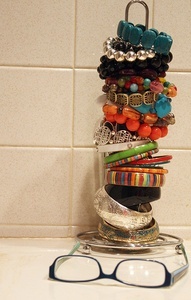
  • Shower Curtain Hooks (for belt and necklace storage)
  • Baskets
  • Ice Cube Trays or Muffin Tins (for earrings and other jewelry)
  • Used Food Jars
  • Ziplock Bags

2) Freebies: Before buying any new organizing products, post what you are in need of on Facebook or Twitter and see if someone in your network is willing to gift it to you. Freecycle.org is also an excellent resource for finding free home goods.

3) Sell Unused Stuff: When cleaning out homes we often come across many valuable belongings that are simply no longer being used. Make money off of these items by selling them at a garage sale, via Craigslist, Tradesy.com, or even a consignment store. The money made can then be used to purchase the necessary organizing items.

4) Sales, Deals & Discounts: When you decide to spend money on organizing products, take advantage of sales and discounts. Typically August is a good time of year to find deals on storage solutions as many stores are promoting off-to-college sales. In terms of discounts, you can usually get at least 10% at Bed Bath & Beyond and Michael’s for signing up for their email programs. The Ikea as-is section and The Dollar Store can also be a great places to find a deal.

5) Purge First: A common mistake that people make when organizing is to buy a ton of storage products that they think they will need before assessing the post-purge room contents. In order to avoid over-spending, complete your room purge first, then buy only the minimum number of products needed to make the space feel organized.

What are your favorite budget organizing tips?

TWOW 

Simple Ways to Feel More Organized

Organizing professionals understand that there are some small things you can work on that make a big difference in the level of organization you feel in your home. These changes don’t take a lot of effort and can be fairly inexpensive, but you’re certain to notice the positive effect in your home. Here are some of our favorite ideas.

1) New Hangers: Changing out your mismatched, old hangers to a complete set can instantly make your closet appear more organized. The process of replacing the old ones can also be a good time to complete a clothing purge and re-organization.

2) Junk Drawer Organization: This is one area of the home that is frequently out of control. Tidying it up with some drawer organizers can feel like a huge relief for most people, but the task can be fairly quick.

3) Implement a Mail Routine: Instead of opening the mail and letting it pile up on the counter for months, institute a daily routine where you open the mail over your shredder and near you filing system. Once mail has been sorted, shred the unnecessary items and file the rest in appropriate mail system folders.

4) Labels: It can be difficult for large families to all contribute to a new system of organization. Labels can help them stick to the system and remember where things belong. Use a label maker to identify where things live in the kitchen, medicine cabinet, office, play room, and anywhere else where items are frequently used and moved.

5) Create Return, Donate, & Repair Bins: Some of the most common clutter that accumulates in homes are items that are actually meant to leave, but never quite make it out. Creating a three bin system in your garage or car can help you move these items along more quickly. When an item needs returning, donating, or repair, simply place it in the correct bin and handle on a regular basis.


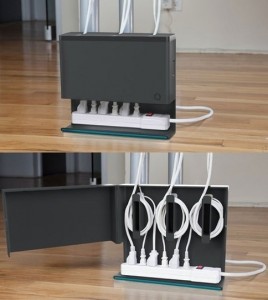
6) Contain Unsightly Cords: Use a cord organizer to discreetly contain and hide cords in your office or living room.

7) Clear off Elevated Flat Surfaces: By taking a few minutes to clear the surfaces in your home of clutter, you’ll feel a greater sense of organization throughout. All elevated flat surfaces count, so don’t forget places like dresser tops, nightstands, and kitchen counters.

8) Bathroom Cabinets: These spaces are often cluttered, but also underutilized. Measure the space and purchase bins or baskets that offer greater use of the full height and width. Organize using a like-with-like strategy.

What are your favorite quick organizing ideas?

TWOW


Living with Less: How to Regulate the Amount of ‘Stuff’ in Your Home

One of the main ways we become overwhelmed with disorganization is by accumulating more ‘stuff’ than our spaces can accomodate. Over time, even the most conscious consumer can find themselves in excess if they do not take steps to regulate the inflow and outflow of things. In order to assist our readers in managing their personal collections we’ve put together a few rules for regulating the amount of ‘stuff’ in our lives.

1)  Know What You Have: If you are planning a shopping trip to the grocery store or the mall, before you leave, take an inventory of what you have and what you need. This will help you to avoid buying duplicates.

2) No Spend Commitments: Often times, homes will have packed pantries and freezers and still continue to bring in more food each week. Committing to one week of eating only the items in your home will help you eat down the current stock and save you money. This process is great for using food items that may be expiring in the coming months.

3) Borrow & Share: If you just need the use of something once or twice, consider borrowing the item from a friend or family member instead of purchasing it. This trick works great for specialty cookware (i.e. pasta maker), tools, special occasion clothing, and sports equipment.

4) Don’t Be Afraid to Return: One common issue we see in homes with disorganization problems is that they have a lot of never-used items that are in someway wrong. Instead of keeping those items indefinitely, make an effort to return them asap. To help you do this, immediately place the return item in your car with the receipt once you decide it is not needed.

5) One in, One Out: The one in, one out strategy is fantastic for maintaining the right amount of things for your space. The way it works is before you bring something new into your home, you must first let go of something else. By employing this method you’ll be encouraged to eliminate the things you don’t need and also monitor the incoming items.

6) Scheduled Purging: It’s easy to get distracted and push organizing projects to the bottom of our to-do lists, but if you commit to a regular purge you’ll begin to develop a more clutter-free existence. We recommend setting aside a Saturday once per quarter to complete a full-home round up of all un-used, broken, and unnecessary items.

Good Luck!

TWOW

9 Things to Review & Do in 2013

A New Year means that certain items in your life may require attention. We’ve put together a list of the most common tasks to complete or review as soon as possible.

1) Prescriptions: Review prescriptions and toss any that have expired. Make note of the ones that are in need of refill and contact your doctor to process the order before it becomes urgent.

2) Documents: Take a look at your passport, driver’s license and any other documents that expire to determine if they require a renewal in 2013.

3) Annual Appointments: Schedule annual appointments for doctors, dentists, optometrists, and accountants.

4) Smoke & Carbon Monoxide Detectors: Change the batteries on the detectors and mark on the calendar when the next change will occur.

5) Pantry & Fridge Contents: Review the food in your pantry and fridge for expired goods. Purge anything that’s expired and make note of the items that have upcoming expirations so that you can use them soon.

6) Filters: Change the filters in your HVAC unit and mark on your calendar the next swap out date.

7) Credit Report: Get a free annual copy of your credit report and review the past year’s changes.

8) Policies: Review any policies that may require updates or renewal in the new year, such as insurance and product warranties.

9) Taxes: Take a look at your income tax withholding from last year and determine if your personal situation has changed in a way that affects your number (i.e. marriage, divorce, children, etc.)

Good luck!

TWOW

5 Steps to Help You Actually Start & Complete that Project

We all have projects and tasks that we’ve been meaning to get to for a while. Those items at the bottom of our to-do lists that for one reason or another we’ve procrastinated getting done. Perhaps it’s an organizing project or maybe it’s finally getting to that filing from last year. No matter the task, we’ve outlined some basic steps to help get you started.

1) Review the Project: Although you may have a general idea of what needs to be done, it helps to get a fresh look at the scope of the project. Determine how long it will take, what you need to complete it, and how you will work.

2) Make a Plan: Once you have a basic idea of what needs to be done, it helps to have a specific agenda or outline of how you will work. For example, if the project is to organize your filing cabinets, decide ahead of time, how many years of documents you will keep, what types of docs will be trashed vs. kept vs. shredded, and if you will need input from others during the process.

3)  Schedule the Time: Putting an allotment of time on the calendar is one of the easiest things you can do to ensure completion of a project. If the task will require several chunks of time, schedule the entire process. Don’t forget to leave yourself enough time before and after to keep distractions from creeping in.

4) Gather What You Need: Before you start the project, gather the necessary tools, supplies, and information. This will keep you from using the excuse of not having what you need to put the project on hold mid-process.

5) Focus on Completion: Once you finally get into the actual work, commit to seeing it through to the end, or the pre-determined stopping point. It’s easy to get distracted or frustrated with things, but if you mentally commit to a goal you’ll find it easier to see it through. We also find that a timer set in brief, but effective time intervals can help.

We hope this 5 step process helps to inspire you to get some of those bigger projects started this year. As always, if you need a little extra help, The Well-Organized Woman is happy to assist.

TWOW

5 Ways to Make Your New Years Resolution Stick

Over 60% of Americans that make New Years resolutions will keep them through January. After that, the number continues to decline as the months go by. There are many reasons as to why so many resolutions are not maintained, but there are ways in which to improve your chances of achieving the goal.

1) Make it Positive: Resolutions that involve denying yourself something, such as diets, can be difficult. Instead, make the goal something positive, such as attending a fitness class 3 times per week for the year. This type of resolution can help you obtain the ultimate goal of weight-loss, but it will seem less restrictive in the process.

2) Be Specific: The most essential part of developing a goal is to outline in specifics what the goal is and how you will achieve it. For example, if your resolution is to read more, perhaps you could make a goal to complete one book every two weeks, at minimum. Create a calendar and keep yourself accountable to noting when the next reading deadline is and you’ll have greater chances of finishing the goal. 

3) Reinforce Yourself: If you’re working towards a goal, it helps to have reinforcement to encourage you. This can come in many forms, such as positive support from friends or family or perhaps a reward of a shopping spree after a benchmark has been met. When setting your goal timeline, add in benchmarks of when you will receive said reward and you’ll have something to look forward to while you are working.

4) Automate: The best way to achieve a goal is to remove yourself as the active participant. For instance, if your goal is to save more money this year, set up at automatic savings transfer to your savings account each payday. Without even thinking about it, you’ll have more money saved by the end of the year.

5) Be Realistic: Goals that are attainable are easier to work towards. Select resolutions that you have a high likelihood of achieving, such as losing 15lbs instead of 50lbs or attempting to have a more organized calendar instead of having a more organized life. Once you obtain the initial goal you can re-plan for future improvements.

We wish you luck in acheiving your New Years Resolutions and a Happy New Year!

TWOW

Last-Minute Holiday Preparations List

With Christmas just a few days away, many of us are rushing to make last-minute preparations. While it’s unlikely we’ll forget to purchase wrapping paper, there are other tasks that may fall through the cracks. To mitigate this potential problem, we’ve created the following list of overlooked holiday to-do’s.

  • Surprise Guests: Purchase a few extra gift cards or bottles of wine for unexpected holiday guests
  • Holiday Tips: Prepare and deliver your holiday gratuities/gifts for service personnel (baby sitters, maids, teachers, postal service person, etc.)
  • Stockings: Buy stocking stuffers
  • Thanks: Purchase thank-you cards for holiday gifts received
  • Overnight Guests: Clean and prepare your home for out-of-town guests
  • Charity: Send all charitable donations before the end of the year for inclusion in 2012 taxes
  • New Years Eve: Make reservations for NYE events or meals
  • Batteries: Purchase a few packs of batteries in varying sizes
  • Groceries: Review your holiday meal menus and determine what still needs to be gotten off of the grocery list
  • Receipts: Organize all holiday gift purchase receipts before the gift-exchange in case someone needs to return something. A new app called Topanga is also a great tool for keeping track of your holiday (and other) purchase information, returns, price details, coordinating products, and warranties.
We also encourage you to check out our downloadable and printable Holiday Planner eBook for more tips of preparing for the holidays in an organized fashion. The ebook is available for purchase ($2.99) via Lulu.com:  http://www.lulu.com/spotlight/HolidayPlanner

We wish you a very happy and organized holiday season!

TWOW

Guest Post: Harmonize Your Home for the Holidays in a Hurry

As the holidays draw near, it seems we’re all getting busier by the day and more stressed by the hour.

Still need to rearrange furniture to make room for the tree?

Maybe you’ve worn grooves into the linoleum from pacing around the kitchen in anticipation of that dinner party you’re going to host?

Whatever your situation, you might think it’s too late to get your home into Santa-style shape.

You would be wrong.

Here are five steps for de-cluttering your home in time for the holiday festivities.

1. Focus on the main rooms. Pick the rooms where your family and visitors are likely to linger, mingle or dine. Concentrate on the dining room, living room, main bathroom and coat closet, for example, before you worry about the kids’ bedrooms, the tool shed out back or the canning cellar under the stairs (shout-out to my family back in Appalachia). Remember — you can always go through other rooms once you’ve handled the main ones, but if you’re pressed for time, don’t set unrealistic goals. Concentrate on the important, the reasonable, the achievable. Once you’ve picked your targets, make sure you take on just one room at a time.

2. Out with the old. It helps to organize and arrange what you want to keep by removing the items you don’t. Gather boxes and label them “donate,” “junk,” and “maybe.” Then, start filling the boxes. Use the “maybe” container for the things you know you should toss – like that decorative “glam rock” rudolph statue you thought was a good idea back in December of ’86 – but don’t have the heart to let go. It’ll help get the ball rolling without causing hesitation or regret since you can make those tough decisions later.

3. Think big. Once you’ve cleared out the clutter that has to go, look at the furniture and larger items in the room. Rearrange before you do anything else. For example, if you need to move the couch to fit the tree into its proper corner, or if you have to slide a random floor cabinet from the dining room to clear space for a kid’s table, do that now.

4. Details matter. Now that you’ve handled the big, space-hogging furniture, take a second look at the room. Notice dirt or dust one the floor where the couch used to be? Are there any stray DVDs, books, papers or other eye-sore-type clutter laying around? If so, sweep the dirt and put the movies back where they belong. If they don’t have a proper place, create one. You can always hide a stack of DVDs under an end table with a floor-length table cloth. Get creative and hide any unsightly clutter that you can’t get rid of. Just resist the urge to bury your husband’s full-size Christmas Story leg lamp in the backyard. Remember, the holidays are supposed to be a peaceful time. Avoid inciting World War III.

5. Teach and preach. This is probably the most important step. If you don’t tell your kids or spouse where things go, they won’t know how to put things back. Stay on top of everyone and let them know that clutter and messy rooms won’t be tolerated (until after the holidays, at the very least).

Bonus Tip: Get your family to help. By “get,” of course, I mean force, threaten, bribe or anything else you can do to get them to chip in. Let them know that you are NOT going to do this alone. The more they help, the more likely they’ll be to stay on top of the upkeep afterward.

Once you’ve finished, sit back and soak it all in. After all, the holidays only come once a year (thank God).

 ——

This post was generously was written by Dan Reidmiller, Creative Director for College Hunks Hauling Junk. College Hunks Hauling Junk and College Hunks Moving is a national junk-removal, labor services and moving company, with franchises serving 45 markets in 25 states, including areas such as Central PA, Chicago, Dallas, Denver, Indianapolis, Los Angeles, Northern NJ, Tampa Bay, Washington DC and now Miami.


Another Pretty Cool Site by:


Copyright 2011 - The Well Organized Woman